
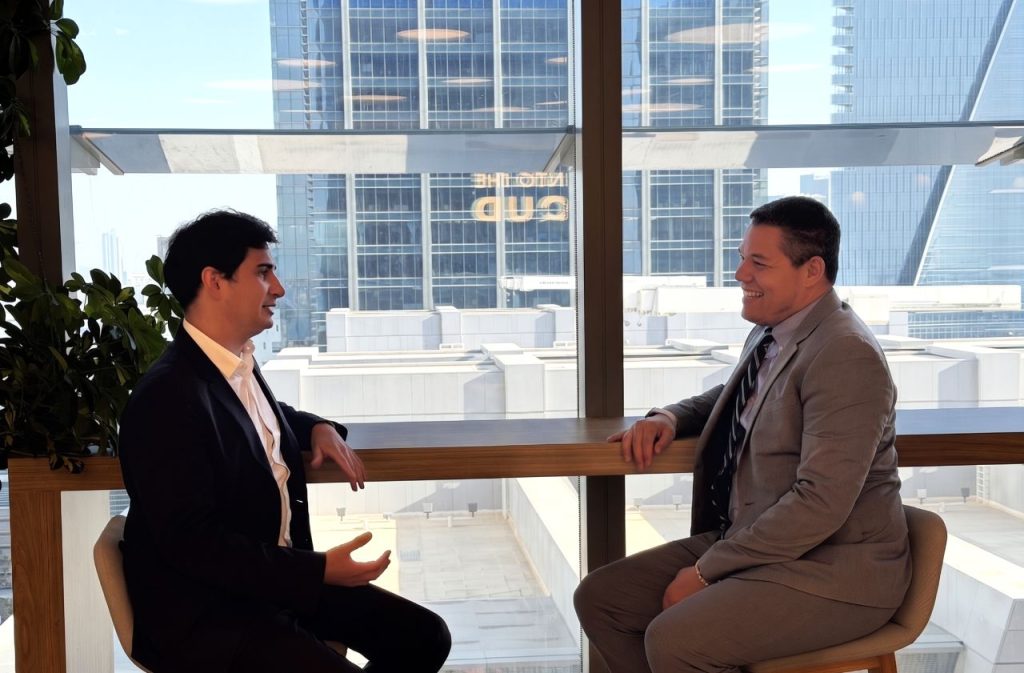
Reflections from CFTE’s conversation with Dr David R. Hardoon in Abu Dhabi
There is a familiar problem inside many organisations trying to use AI.
The business wants to move quickly.
The technology team wants to experiment.
The governance team wants to understand the risks.
Leadership wants confidence before anything is scaled.
Too often, these teams meet too late.
A use case is built. A pilot is tested. Then governance is asked to approve it. At that point, the conversation can feel like a stop sign: too risky, not clear enough, not ready, not aligned.
But governance should not be where innovation stops.
That was one of the key messages from CFTE’s recent conversation with Dr David R. Hardoon in Abu Dhabi: good governance should help organisations move forward, not hold them back.
The problem is not governance. It is when governance starts.
AI is now part of real work in financial services. It is being used in customer service, fraud detection, compliance, operations, software development, research, productivity, and decision support.
That means governance can no longer be treated as a final approval step.
If governance only comes in at the end, teams are left guessing what is acceptable. They may build something that cannot be used. They may move too slowly. Or worse, they may avoid the process altogether because it feels disconnected from the work.
The better approach is to bring governance in earlier.
Before a team starts building, they should already understand the basic questions:
What data can we use?
What risks are we comfortable with?
Where do we need human oversight?
What happens if the system makes a mistake?
Who is responsible?
These questions do not stop innovation. They make innovation usable.
From “no” to “how”
Dr Hardoon has been part of CFTE’s AI journey since 2018. Back then, the conversation around AI in finance was still mostly about machine learning, data, model governance, and responsible experimentation.
Today, the conversation has changed.
Generative AI has entered daily workflows. Agentic AI is raising new questions about autonomy and oversight. Regulators are looking closely at how institutions balance innovation with trust.
But one message has stayed consistent: governance should not be the department of “no”.
Its role should be to help teams understand how something can be done safely, where the boundaries are, and whether the organisation is ready to proceed.
That is a much more useful way to think about governance.
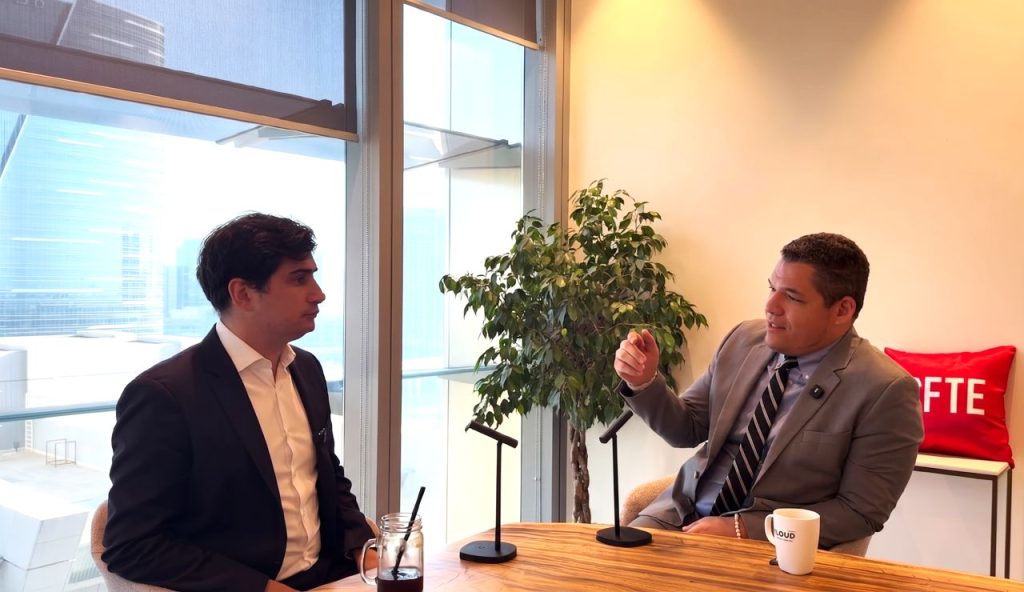
AI cannot be governed once and forgotten
One reason AI is difficult to govern is that it does not behave like a normal business process.
A traditional process can often be reviewed, approved, documented, and checked again later.
AI is different.
Models change.
Outputs vary.
Users behave differently.
New risks can appear after deployment.
This is especially true when AI systems produce different answers depending on prompts, context, data, or user behaviour.
So governance cannot be a one-time gate. It has to continue after launch.
That does not mean making every AI project slow or heavy. It means having practical ways to monitor what is happening, spot issues early, and know when someone needs to step in.
Done well, governance does not slow teams down. It prevents them from reaching the end of a project and discovering that what they built cannot actually be used.
Agentic AI makes this even more important
The conversation became especially interesting when it turned to agentic AI.
Agentic AI is often described as AI that can act more independently. But for organisations, the bigger issue is not just the AI agent itself. It is the system around it.
In a bank, an AI tool does not operate in isolation. It connects with policies, customer data, internal workflows, human teams, escalation rules, and compliance requirements.
Take a call centre as an example.
The question is not only: did the AI give the right answer?
The better questions are:
Was the answer based on the right information?
Did it follow the bank’s policy?
Did it know when to escalate to a human?
Can the organisation see what happened?
Who is accountable if something goes wrong?
This is why AI governance cannot only focus on the model. It has to look at the whole system.
Governance is also about people
Another important point from the discussion was that governance is not only about policies and controls.
It is also about capability.
Many organisations already have access to AI tools. That is not the main problem.
The bigger challenge is that different teams understand AI in very different ways.
Business teams want speed.
Technology teams want to test.
Risk teams need clarity.
Leaders need confidence.
Employees need to know what responsible use looks like.
When these groups do not share a common language, AI adoption becomes slow and fragmented.
This is why capability building is part of governance.
A policy only works if people know how to apply it. A framework only matters if teams can use it in real decisions. Responsible AI principles only matter if they change how people design, use, monitor, and challenge AI systems.
Why this matters in Abu Dhabi and the UAE
David’s visit to Abu Dhabi reflects a wider priority for CFTE: bringing global experts into the UAE and the Middle East to support the region’s ambitions in AI, finance, and future skills.
The region is not watching the AI conversation from the sidelines.
Governments, regulators, financial institutions, and enterprises are actively investing in AI as a driver of productivity, competitiveness, workforce transformation, and innovation.
But what makes the conversation especially important is the focus on people.
AI adoption is not only about infrastructure, models, or tools. It is about whether leaders, teams, and institutions have the skills and judgement to use AI well.
That is where global expertise needs to meet local ambition.
The right question is not simply: what is global best practice?
A better question is: what is globally informed, locally relevant, and useful in practice?
The human skill that matters most
One of the strongest ideas from the conversation was about human judgement.
As AI becomes more capable, people do not become less important. Their role changes.
People need to become better at asking questions, framing problems, recognising trade-offs, interpreting outputs, and taking responsibility for decisions.
David described cognitive skills as a muscle. That is a useful way to think about AI readiness.
If AI helps more with execution, then human value moves towards judgement.
What should we ask?
What should we trust?
What should we challenge?
What could go wrong?
What does a responsible decision look like?
These are the questions that will determine whether AI creates real value or introduces new risks.
The real work ahead
We are grateful to Dr David R. Hardoon for joining us in Abu Dhabi and for continuing to contribute to CFTE’s work.
His message is timely for financial services and for the region.
Governance and innovation should not sit on opposite sides of the table. Governance should help teams move with more clarity. Innovation should bring governance into the process earlier. Capability building should give people the confidence to make better decisions.
At CFTE, this is why we bring experts like David to the UAE and the wider Middle East.
The aim is not to add another conversation about AI trends. It is to support the people and institutions building the future of finance in practice.
AI governance is not the brake.
Done properly, it is how organisations learn to move faster, safer, and with greater confidence.
