AI did not arrive all at once. It has come in waves, each one changing what machines can do and what humans need to do alongside them. Understanding these waves is the fastest way to make sense of a field that changes every month. This framework comes from the work of CFTE co-founder Huy Nguyen Trieu, author of The AI-fication of Jobs, who uses it with financial institutions, regulators and governments.
In short: we are moving from AI that could think, to AI that can execute, and now to AI that can move.
Wave 1: Predictive AI (roughly 2010 to 2022)
The first wave was machine learning that found patterns in data. It powered fraud detection, credit scoring, spam filtering and recommendations. Banks have used it for years.
It was powerful but invisible. It sat behind systems and was built and run by specialists. Most professionals never interacted with it directly.
In finance: fraud and anti-money-laundering alerts, credit decisions, trading signals.
Wave 2: Cognitive assistance (from November 2022)
The launch of ChatGPT in November 2022 made AI something anyone could talk to. Generative AI could draft, summarise, translate, research and code. For the first time, AI became a collaborator any professional could use without a technical background.
In finance: drafting client communications, summarising regulation, research support, coding assistance.
Wave 3: Cognitive autonomy (from late 2025)
In the third wave, AI stopped only answering questions and started taking actions. AI agents can use the same digital tools people use, such as email, documents, spreadsheets and websites, to carry out multi-step work with limited supervision.
Huy illustrates this with a demonstration: in one minute of instructions, an agent connected to his email, documents and website gathered AI risk publications from bodies such as IOSCO, ESMA, the ECB and the FCA, categorised them in a spreadsheet, wrote a summary document and published it, in about ten minutes. As he stresses, outputs like this still need human review and judgement.
In finance: agents that prepare credit memos, run compliance checks across systems, reconcile data and handle customer requests end to end.
Wave 4: Physical AI (beginning now)
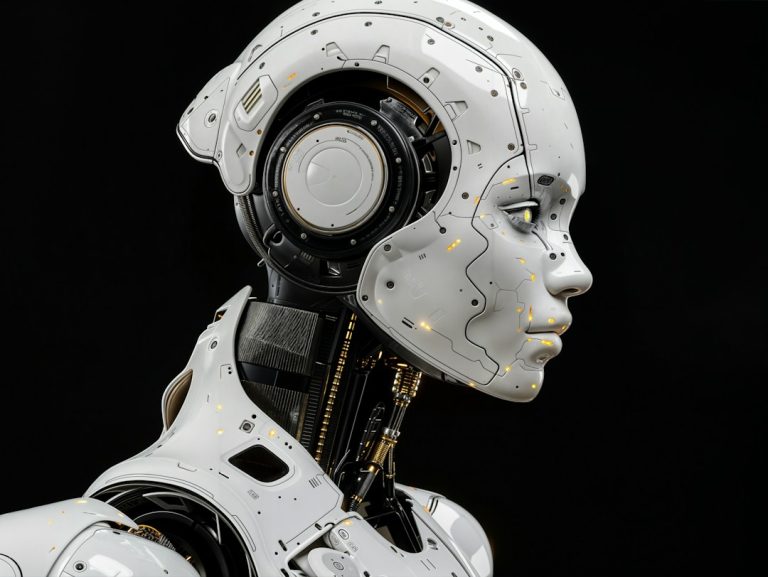
In the fourth wave, intelligence leaves the screen and enters machines that move: robots, vehicles and devices. NVIDIA framed its 2026 developer conference around physical AI, with world models and robotics platforms built for embodied systems (Automate.org).
Once AI touches the physical world, the governance question changes. It is no longer only whether an answer is accurate, but whether a machine is safe.
In finance: insurance and lending for autonomous systems, risk models for robotics, and new liability questions.
The waves overlap rather than replace one another. Predictive models still run fraud and credit systems while generative assistants and agents spread across the same institutions. For leaders, the useful question is not which wave they are in, but which governance each type of AI requires.
Why the waves are speeding up
Huy points to three trends happening at the same time:
| Trend | Evidence he cites |
| AI is becoming more powerful | A benchmark for fixing bugs in real software, where AI scored 1.7 percent in 2023, has since been effectively saturated |
| AI is becoming cheaper | A million tokens of GPT-3.5 cost about US$20 three years ago, then US$2, then under 20 cents |
| AI is becoming more autonomous | Three years ago AI could sustain about four minutes of a good professional’s work before errors piled up; today it can sustain the equivalent of around twelve hours |
The result is a technology that is ten to a hundred times better and cheaper every year. In Huy’s words, what is possible today will cost almost nothing tomorrow, and what is not possible today may be possible tomorrow.
What the four waves mean for people and organisations
Each wave changes the human role. In wave 1, people needed to trust specialists. In wave 2, everyone needed AI literacy. In waves 3 and 4, people need to delegate, supervise and govern AI that acts.
Cognitive work is decoupling from headcount. Organisations can now grow output without growing staff in the same way. Huy cites Microsoft, which grew revenue around 13 percent a year from 2016 to 2023 with workforce growth of about 10 percent, then grew faster from 2023 while holding its workforce flat.
Institutions were built for a slower world. Three- and five-year plans struggle when capabilities change monthly. That makes talent the highest-leverage investment: people who can redesign work as the technology moves.
How to prepare
- Map where your organisation sits on each wave, by function.
- Move beyond chat. If teams only use AI as a chatbot, they are still in wave 2.
- Design governance for actions, not just answers: permissions, monitoring, escalation and audit.
- Build capability systematically, using a framework such as the CFTE AI Proficiency Framework.
Understanding the four waves helps leaders make sense of rapid change without chasing every announcement. Each wave asks something different of people and institutions, and the organisations that prepare their talent for those shifts will be best placed to benefit from them.
Frequently asked questions
What are the four waves of AI?
Predictive AI (pattern detection, roughly 2010 to 2022), cognitive assistance (generative AI from November 2022), cognitive autonomy (AI agents that take actions, from late 2025) and physical AI (intelligence in machines that move, beginning now).
What is agentic AI?
Agentic AI refers to AI systems that can plan and carry out multi-step tasks using digital tools, such as email and spreadsheets, rather than only answering questions.
What is physical AI?
Physical AI is artificial intelligence embedded in machines that act in the physical world, such as robots, vehicles and devices.
About CFTE
The Centre for Finance, Technology and Entrepreneurship (CFTE) is a global platform that partners with financial institutions, regulators and governments to build future-ready workforces at scale. Founded in 2017 by Huy Nguyen Trieu and Tram Anh Nguyen, CFTE has supported more than 200,000 professionals across 130+ countries and works with 250+ leading organisations. It has offices in London, Singapore and Abu Dhabi.
CFTE’s work spans AI capability diagnostics, role-based learning pathways and executive education, built on public frameworks including the CFTE AI Proficiency Framework, the Performance Hexagon and SHIME. CFTE founded Global Women in AI to help more women lead, build and shape the future of AI. Learn more at cfte.education.