
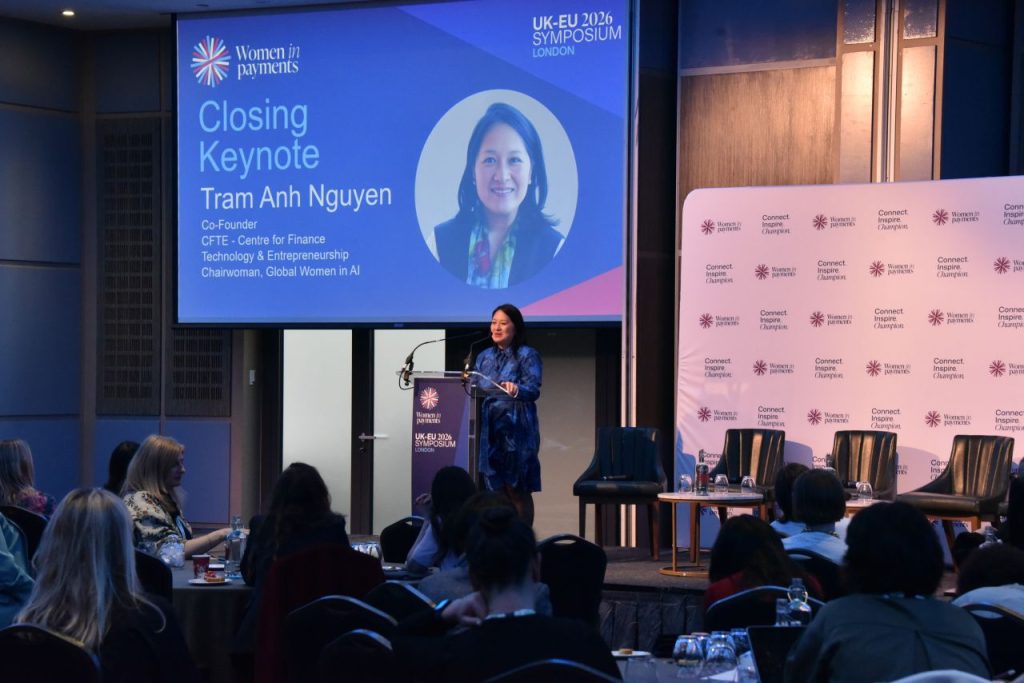
By Tram Anh Nguyen Co-founder, CFTE (Centre for Finance, Technology and Entrepreneurship) | Chairwoman, Global Women in AI Closing keynote delivered at the 60th Women in Payments UK-EU Symposium, London, 2026
I have spent the past twenty-five years reinventing myself.
From capital markets trader on Wall Street to wealth manager in London. From banking professional to co-founder of one of the world’s largest fintech education platforms. From building a company to building a global movement for women’s leadership in artificial intelligence.
Each of those transitions looked different from the outside. But from the inside, they all required the same thing: the willingness to rebuild, not just move.
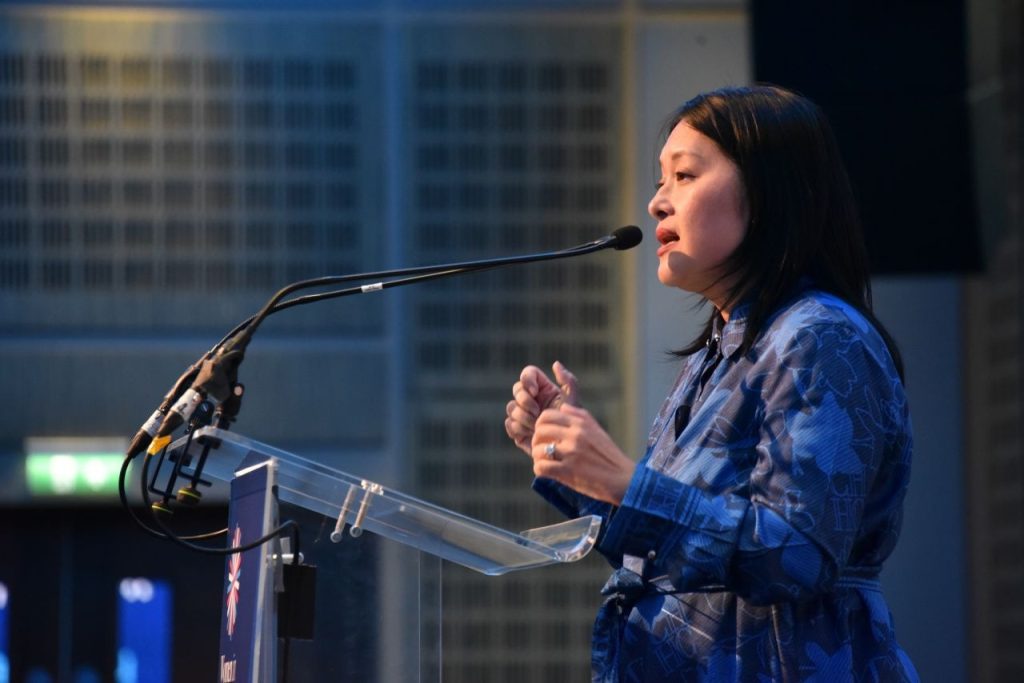
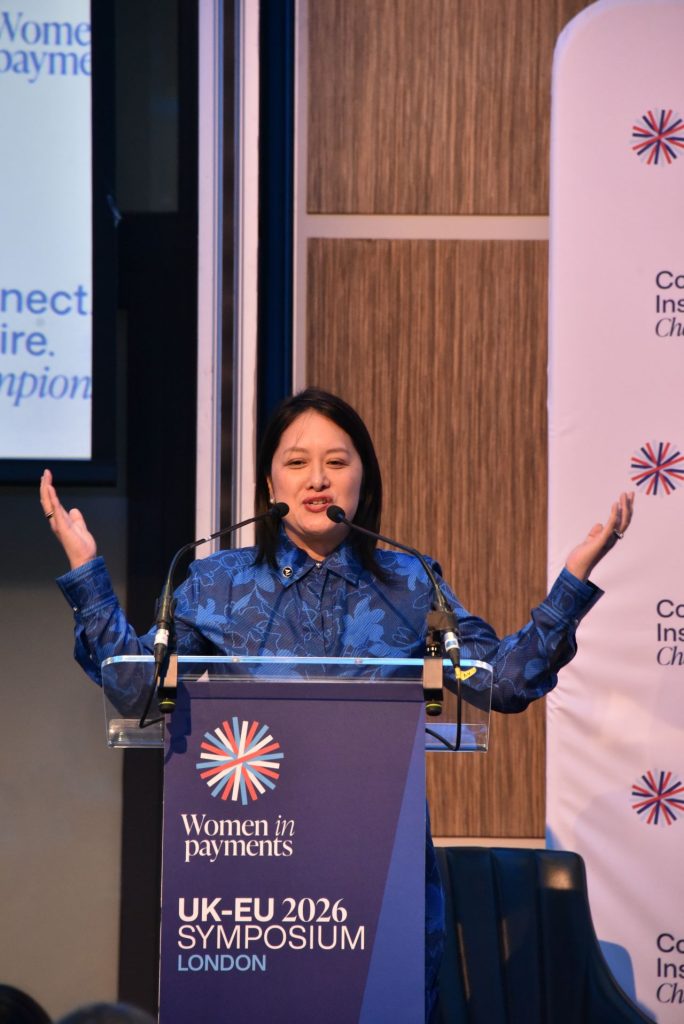
I spoke at the closing of the 60th Women in Payments UK-EU Symposium in London because I believe we are standing at the most important professional turning point of our generation. Not just in payments. Not just in financial services. In every field that AI will touch, which is every field there is.
And my message is this: the professionals who will lead through this moment are not the ones who know the most about AI today. They are the ones who have built the capacity to reinvent themselves continuously.
Reinvention is not a moment. It is a muscle.
From Wall Street to CFTE:
I began my career in emerging markets trading rooms in New York. They were fast, demanding, and overwhelmingly male. I then moved through Standard Chartered and Dresdner before joining UBS in London, working in wealth management with ultra-high-net-worth clients across the US, the UK, India and Asia.
At the time, I thought I had already learned how to reinvent myself. I had changed cities, institutions, asset classes and client bases. I had crossed cultures and time zones more times than I could count. I am of Vietnamese origin, born and raised in Paris, and my heritage has always shaped how I understand resilience and how I think about opportunity.
But those were career moves.
The first genuine reinvention came when I attended a session at Oxford almost by chance. The session was on fintech, taught by Huy Nguyen Trieu, who later became my co-founder. For the first time, I saw finance through a different lens. I saw that technology could make it more accessible, more inclusive, more efficient. I saw open banking, digital payments, mobile money and data platforms not as products, but as forces capable of changing lives.
And then I saw a gap.
The technology was accelerating. The industry was restructuring. But professionals were not learning fast enough. My former colleagues across capital markets, wealth management, compliance, regulation and payments were all asking the same questions: How do I keep up? How do I learn without going back to university, spending a fortune, or leaving my job?
The problem was not ambition. The problem was access.
That was the beginning of CFTE. Not as a business plan. As a response to a structural gap between those who had access to the future and those who did not.
The decision to build CFTE was not a career move. It asked me to rebuild my identity entirely. To go from having a title to having a mission. From a salary to uncertainty. From working inside an institution to questioning whether institutions were building the right things at all.
That is reinvention. And it does not happen without difficulty.
What Crisis Taught Me About the Reinvention Muscle
On the morning of 11 September 2001, I was in New York. Our office was in World Trade Center 7, and we lived directly across from the Twin Towers.
I was walking to work when the first plane hit.
Within minutes, the phone networks were down, the streets were chaos, and I could not return to my apartment. My husband was in Paris. I was alone, displaced and completely uncertain about what would follow.
In the weeks that followed, our team at Standard Chartered moved to temporary offices in New Jersey. We rebuilt the trading room. We supported one another. We created an environment where people could feel safe, work, and believe in the future again. One year later, our team was recognised as one of the best on Wall Street.
That experience embedded something in me that has never left: a crisis does not build the reinvention muscle. Choosing to rebuild does.
You may not choose the disruption. But you choose the response.
When COVID arrived, CFTE was still a young company. Travel stopped. Events stopped. Filming stopped. Projects were delayed. Clients were uncertain. Teams were under pressure.
And once again, the question was the same: how do we rebuild?
This time, I had something I did not have in 2001. I had already practised reinvention. I had already learned to move fast, to operate efficiently, to find new ways to deliver value under constraint.
We created virtual campuses. We supported thousands of professionals stuck at home, anxious about their futures, hungry to learn. CFTE did not just survive that period. According to our own platform data, CFTE trained over 200,000 professionals across more than 130 countries in the years that followed, with demand accelerating through and after COVID.
Not because everything was in place. Because the team had already built the muscle.
The Three Waves of AI and Why the Third One Changes Everything
Today, CFTE has worked with central banks, regulators, global financial institutions and fintech companies around the world. But the reason I care so deeply about what is happening with AI right now is not about CFTE’s growth.
It is because we are at another inflection point. And this one is structurally different from anything the past decade produced.
I think about AI in three distinct waves.
Wave 1: Predictive AI
The first wave was AI that could detect patterns. Fraud detection. Credit scoring. Recommendation engines. This was powerful, but largely invisible. It operated behind the system and was inaccessible to most professionals without deep technical training.
Wave 2: Cognitive Assistance
The second wave changed the interface. AI could draft, summarise, translate, generate, research and code. It became a collaborator that any professional could access. This is the wave most of us have been operating in for the past two to three years.
Wave 3: Cognitive Autonomy and Execution
We are now entering the third wave. AI is no longer answering questions. It is taking actions. Moving from tools to agents. From support to execution. From assisting professionals to, in some cases, replacing discrete tasks entirely.
When the internet was growing at 2,300 percent annually in 1994, Jeff Bezos left a well-paid hedge fund role because he understood what exponential growth actually means. The internet took twelve years to reach 800 million users. AI reached that number in three years.
This is the world we are entering. And every professional in finance, payments and regulation will need to reinvent how they work within it.
The Paradox at the Centre of This Moment
And yet, here is the tension I cannot ignore.
In a world of abundant AI tools, platforms and opportunity, out of the top 100 leaders in artificial intelligence today, only 10 are women.
The rooms where AI products are built, where investment decisions are made, where governance models are written, where the standards and ethics of AI are being defined: these rooms are still not representative.
This is not a pipeline problem. This is a structural one.
Women across finance, payments, regulation and entrepreneurship have the domain expertise, the institutional knowledge and the leadership experience that the AI era needs. What is missing is not capability. What is missing is access to the infrastructure of AI leadership.
That is precisely why I founded Global Women in AI, a multi-stakeholder platform established to advance women’s leadership, representation and influence across the artificial intelligence ecosystem. Operating across more than 100 countries, and working with governments, industry leaders, academic institutions and international bodies, the platform is building the infrastructure for women to shape AI development, not simply adopt it.
As part of this work, I am proud to be building the Supercharged 10,000 Women in AI initiative, designed to equip 10,000 women with the mindset, skills, confidence, network and practical AI fluency to lead in the age of cognitive autonomy. Not just to use AI tools, but to build with AI, govern AI and lead organisations through AI-driven transformation.
The reinvention pipeline for women in AI is not empty. It is blocked. And we are working to unblock it.
Three Things I Have Learned About Building the Reinvention Muscle
After twenty-five years of navigating change across banking, entrepreneurship and AI, I would share three lessons with any professional standing at this particular crossroads.
Your past is not a disadvantage. It is your edge.
When I moved from banking into fintech education, I did not abandon my experience. I built on it. My understanding of institutional finance helped me work with regulators and central banks. My experience as one of the few women in the trading room helped me understand why access and inclusion are structural issues, not personal ones. Do not assume your background makes you late to AI. Your domain expertise may be precisely what makes you valuable within it. The future is not built by people who discard their knowledge. It is built by people who upgrade it.
Reinvention is not something you build alone.
No significant transformation happens in isolation. The Women in Payments community exists because women created space for each other. Networks matter. Communities matter. Sponsorship matters. When Sir Demis Hassabis and the team at Google DeepMind built AlphaFold, using AI to predict more than 200 million protein structures and earning the 2024 Nobel Prize in Chemistry, they were working as a team, within an institution, with accumulated knowledge from across a global scientific community. AI did not replace their curiosity. It amplified it. The same is true for every professional in this room who chooses to build collaboratively rather than wait for permission to lead.
The future rewards those who build.
The greatest professional advantage in a world that is accelerating is not knowing everything. It is the capacity to learn fast, adapt fast and build fast. In finance, in payments, in regulation, in technology, the professionals who will define the next decade are already asking the question: where can I reinvent myself to create something that did not exist before?
A Closing Thought
Reinvention is a muscle.Some of you have used it many times already. Some of you are using it now. Some of you will need to use it very soon.
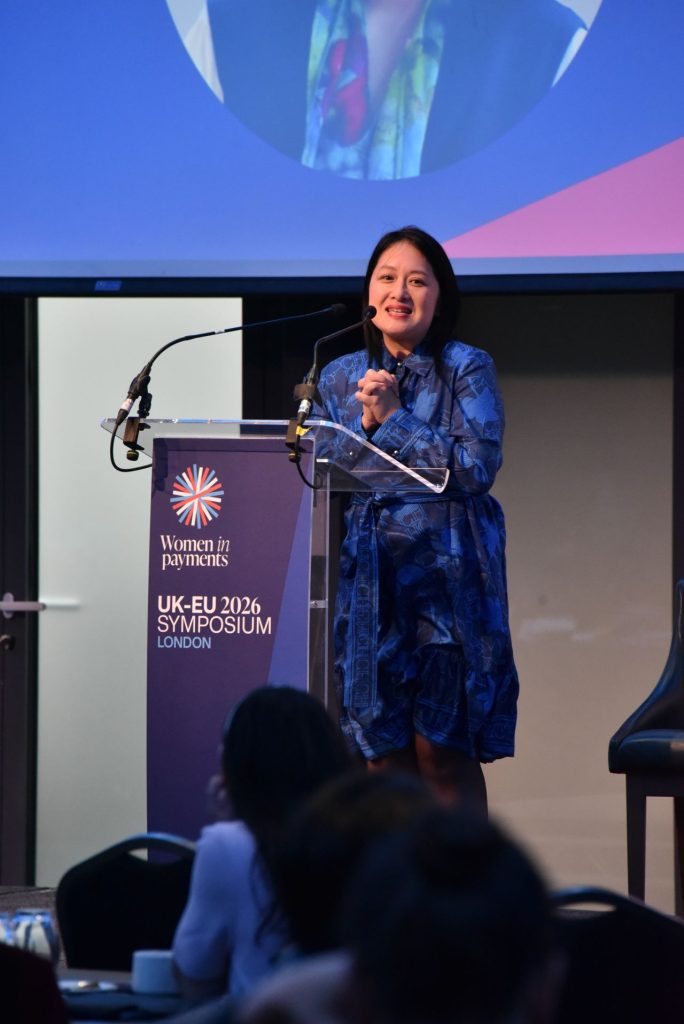
My message is the same as it was when I stood on that stage in London: do not wait to be invited into the future. Build your place in it. The AI era is not something that is happening to you. It is something you are capable of shaping. And in a world that moves faster than any of us planned for, the most important thing any of us can do is keep building.
Tram Anh Nguyen is Co-founder of CFTE (Centre for Finance, Technology and Entrepreneurship), a global platform that has trained over 200,000 finance and technology professionals across 130+ countries, and Chairwoman of Global Women in AI.
