By Tram Anh Nguyen, Co-Founder of CFTE and Chairwoman of Global Women in AI
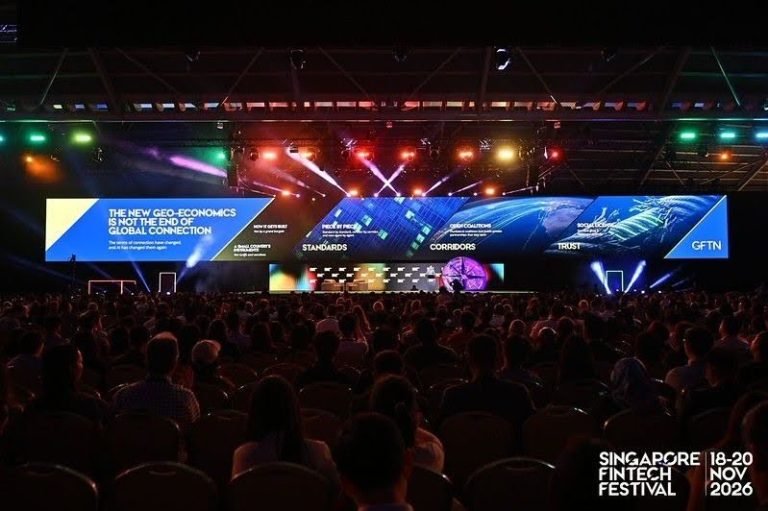
One of my favourite things about Singapore FinTech Festival has always been the people.
Every year, it brings together an extraordinary community of policymakers, regulators, financial-services leaders, technologists, entrepreneurs and innovators from around the world.
It feels like a global reunion, but also an opportunity to challenge our thinking about the future of finance.
Returning as an SFF Ambassador this year was particularly meaningful. Alongside reconnecting with friends, partners and industry leaders, I had the opportunity to contribute to discussions across the Global SME Finance Forum, Insights2040 and the wider festival ecosystem.
A particularly important milestone for us at CFTE was the launch of the FCA’s AI Spotlight Observatory, developed in collaboration with CFTE and technology partner NayaOne.
Looking back at the week, one message stands out:
The future of finance is no longer simply about accelerating technological innovation. It is about building the shared intelligence, governance, trust and human capabilities that will allow innovation to scale responsibly.
And several developments at Singapore FinTech Festival 2026 brought this into focus.
1. The AI Spotlight Observatory: From fragmented experience to shared intelligence
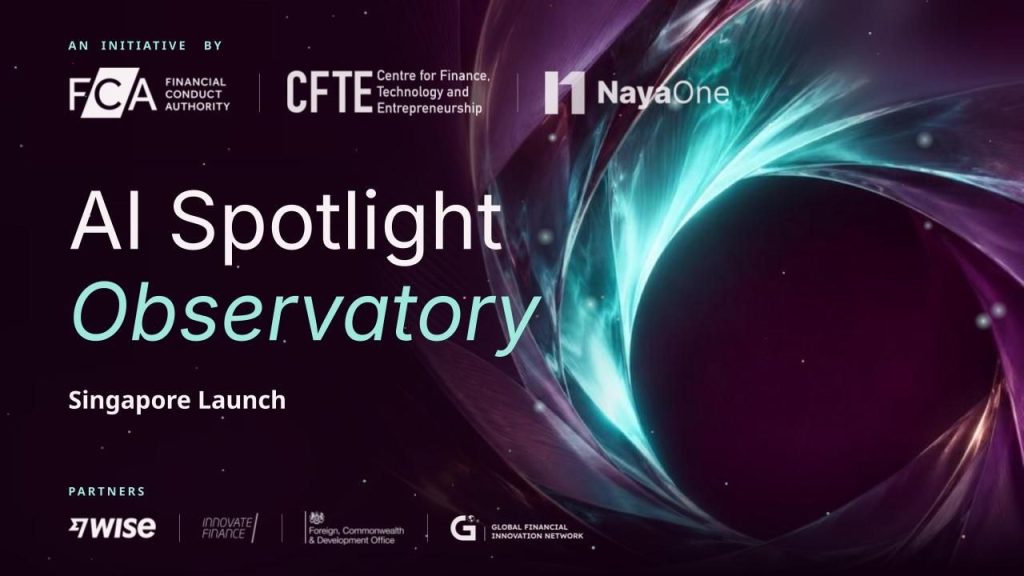
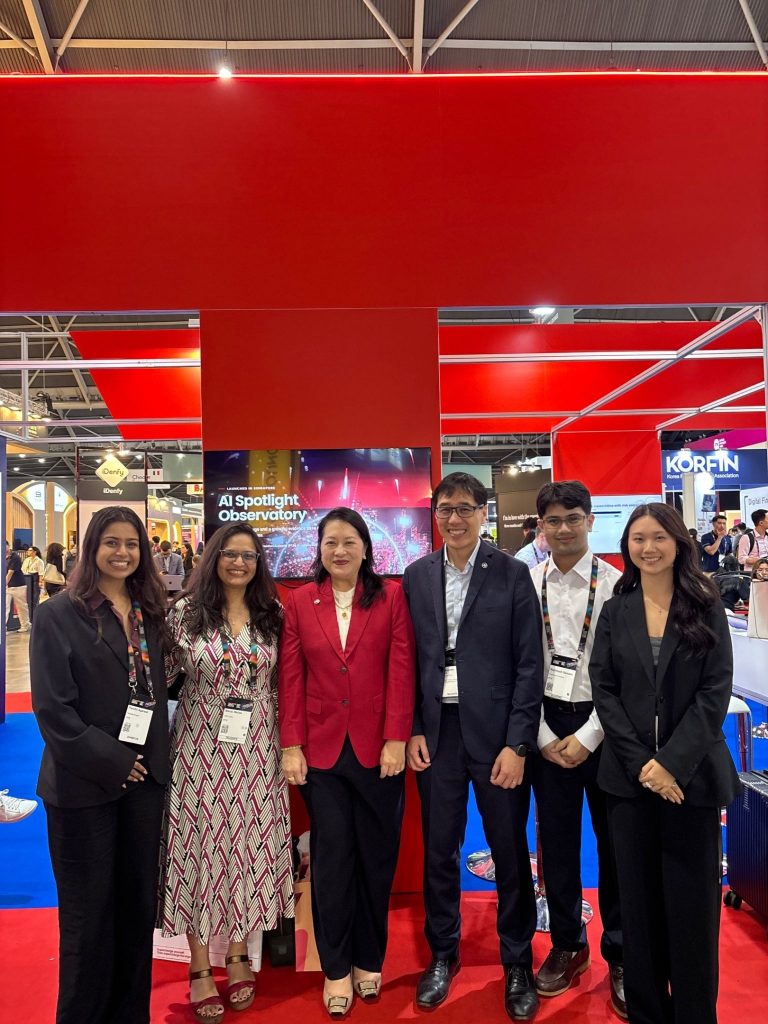
One of the highlights of the week was the launch of the AI Spotlight Observatory, an initiative led by the UK’s Financial Conduct Authority (FCA), developed in collaboration with CFTE and built with technology partner NayaOne.
Launched in Singapore on 19 November, the Observatory represents an important step towards helping the global financial-services industry develop a clearer picture of how artificial intelligence is being used in practice.
It brings together real-world AI use cases from more than 200 organisations, spanning 150 areas of financial-services activity.
Why does this matter?
Almost every financial institution today is discussing AI. Many are investing in it, experimenting with it or already implementing applications across their businesses.
But an important challenge remains.
Do we really have a shared understanding of where AI is being applied, what problems it is solving, and what we can learn from real-world implementation?
AI applications are often described in different ways. One institution may discuss automation, another generative AI, and another intelligent risk management, even when the underlying business activities are similar.
This makes meaningful comparison difficult.
It can also leave valuable insights fragmented across institutions, markets and jurisdictions.
The AI Spotlight Observatory addresses this challenge through a common taxonomy and a structured repository of AI use cases and implementations.
By classifying applications according to their business functions and value drivers, the Observatory gives institutions and regulators a common language for understanding how AI is changing financial services.
Importantly, it also distinguishes between a use case—what AI can be applied to—and an implementation—how that application has been deployed in practice.
This distinction is essential if we want to move beyond discussing AI’s potential and develop a more evidence-informed understanding of its adoption.
For CFTE, it has been a privilege to work alongside the FCA on this initiative.
Our contribution has included supporting the development of the common taxonomy, building the repository of practical use cases and engaging with the financial-services ecosystem to encourage the exchange of knowledge.
As I shared at the launch:
“We are delighted to have worked with the FCA on this world-first initiative. As AI moves from experimentation to implementation, the challenge is not just developing new applications, but learning systematically from real-world experience. By bringing these experiences together through a common framework, the Observatory helps financial institutions and regulators build the shared knowledge needed to make more informed decisions. We hope it becomes a resource that the global financial-services community continues to contribute to and learn from.”
What excites me most is the potential for the Observatory to develop into a resource that benefits the entire financial-services ecosystem.
Financial institutions can use it to better understand and compare AI applications. Regulators and policymakers can draw on a more consistent picture of market developments. Innovators and researchers can identify emerging opportunities and questions worth exploring.
And because AI adoption is evolving so quickly, the Observatory is designed to grow as more organisations share their experiences.
The long-term value will come not only from the information it contains today, but from the collective learning it can enable tomorrow.
The Observatory is a knowledge and market-intelligence resource, not a regulatory approval or endorsement of the AI applications featured.
Explore the AI Spotlight Observatory
2. Agentic AI is changing the questions financial institutions must ask
Another major theme at SFF 2026 was Agentic AI.
Until recently, much of the conversation around AI in financial services focused on tools that could assist people: analysing information, generating insights, automating processes or supporting decisions.
We are now entering a new phase.
AI agents are increasingly being developed to take actions, execute tasks and interact with financial systems on behalf of people and organisations.
Consider what this could mean for payments, treasury management, financial planning or lending.
An AI agent could eventually compare financial products, initiate transactions or manage parts of a business’s financial operations within defined permissions.
The Monetary Authority of Singapore (MAS) announced work on a Know Your Agent protocol and an Agentic Money Sandbox, demonstrating the importance of preparing financial infrastructure for this next phase.
But as AI gains greater autonomy, new questions emerge.
Who authorises an AI agent to act?
How can a financial institution verify its identity and mandate?
Who is accountable when something goes wrong?
How do we maintain oversight as AI systems become more capable and their behaviour evolves?
These are not simply technology questions.
They are questions of governance, trust, operational resilience and human accountability.
This is also why initiatives such as the AI Spotlight Observatory matter.
As AI applications become more sophisticated, the industry needs better ways to understand where these technologies are being used, how they are evolving and what evidence is available from implementation.
Shared knowledge becomes increasingly important when technology moves faster than established organisational practices.
3. AI transformation is becoming a system-wide challenge
Singapore’s announcement of three National AI Missions for Financial Services was another significant development.
The missions focus on financial crime prevention, improving access to SME financing and enabling safe agentic transactions.
What struck me was the recognition that some of the most important opportunities for AI cannot be addressed by individual institutions acting alone.
Take SME financing.
Small businesses frequently face challenges accessing capital, particularly when traditional assessments fail to capture their business potential or when relevant financial information is fragmented.
AI, combined with richer business and transaction data, could help financial institutions develop more informed approaches to credit assessment and financial inclusion.
Similarly, detecting financial crime and scams requires greater coordination across institutions and the wider ecosystem.
These challenges illustrate a broader principle.
AI transformation cannot always be delivered within the boundaries of a single organisation.
It increasingly requires collaboration between regulators, banks, technology providers, researchers and industry bodies.
Singapore’s approach also reinforces the importance of developing common infrastructure, shared learning and practical mechanisms for experimentation.
For me, this is one of the most promising directions for the financial-services industry.
The next phase of innovation will be shaped not only by the capabilities of individual companies, but also by the strength of the ecosystems they build together.
4. The next challenge is not AI adoption. It is understanding and measuring value.
One of the questions I continue to return to is whether financial institutions are measuring AI success in the right way.
AI adoption is accelerating, but adoption is not the same as value creation.
Implementing more AI tools does not automatically mean an organisation is becoming more innovative, more competitive or better equipped to serve its customers.
We need to ask more meaningful questions.
Where does AI improve productivity?
Where does it strengthen risk management?
How does it contribute to better consumer outcomes?
Can it improve access to financial services?
Does it create new sources of growth?
And how do we distinguish early experimentation from applications that have demonstrated value in real operational environments?
This is precisely where a common framework becomes useful.
The AI Spotlight Observatory classifies use cases through the lens of business functions and value drivers, helping institutions describe not only the technology involved, but also the business activities and intended outcomes.
It provides a structured foundation for comparison and learning.
Of course, a catalogue of use cases is not, by itself, proof of commercial returns or successful implementation.
But it helps establish the common language and evidence base needed for better conversations and more informed decisions.
If we want to scale responsible AI, we must improve our ability to learn from what is actually happening—not only from what technology promises.
5. The future of work cannot be separated from the future of finance
While infrastructure, technology and regulatory innovation were central to SFF 2026, the conversations around talent and workforce transformation were equally important to me.
At the Insights2040 Annual Meetings, I joined a discussion on a question that deserves much greater attention:
Is AI pulling the ladder up?
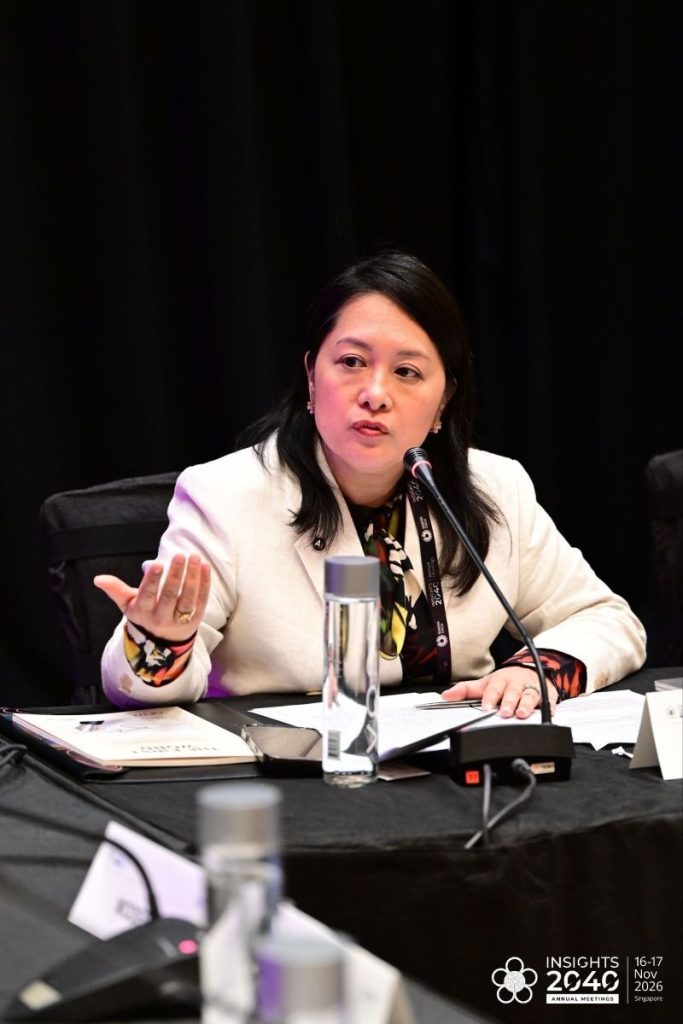
How do we prepare graduates for jobs that are changing before they enter the workforce?
And how should employers, educational institutions and policymakers redesign learning and career pathways for an AI-enabled economy?
These questions are especially relevant for emerging economies, where access to high-quality jobs and professional development can shape wider economic opportunity.
Through our work at CFTE with financial institutions, regulators and industry bodies, we have seen that successful AI transformation requires more than training a small group of technical specialists.
AI capability must be developed across entire organisations.
Senior leaders need to understand the strategic opportunities and limitations of AI.
Risk and compliance teams need to assess AI-enabled systems.
Professionals need to understand how their roles and responsibilities are evolving.
And boards need to develop the knowledge and confidence to challenge management on AI strategy, governance and execution.
This is why I believe workforce transformation must become part of the strategic AI conversation, not an activity delegated entirely to HR or learning teams.
The organisations that adapt successfully will be those that invest in their people with the same seriousness as they invest in technology.
6. SME growth requires more than access to finance
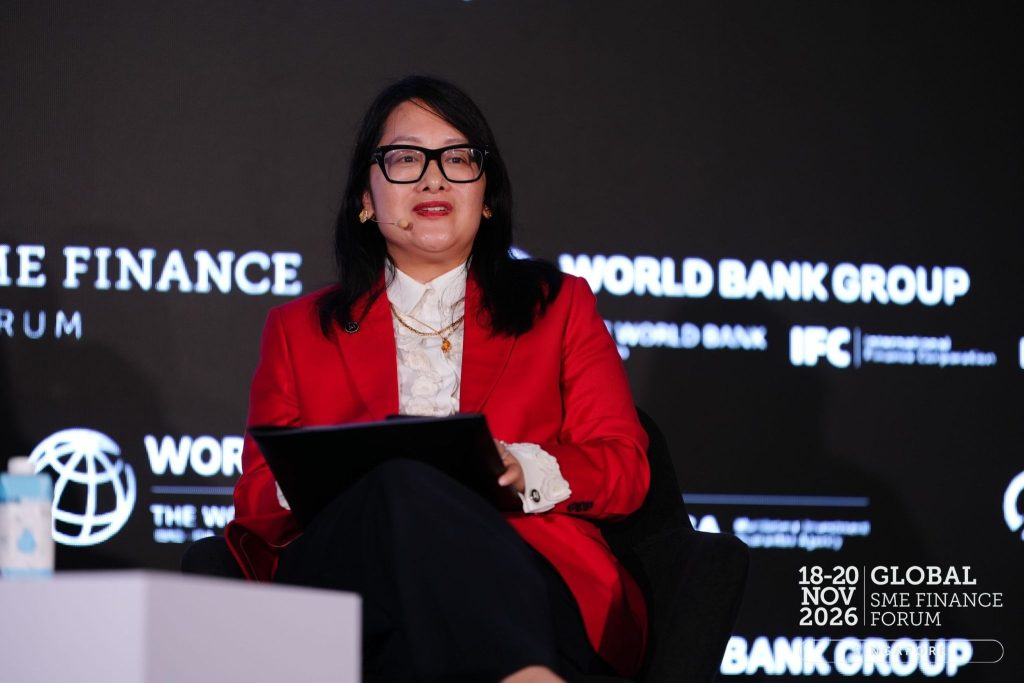
Another valuable part of the week was participating in the Global SME Finance Forum.
I particularly appreciated the opportunity to exchange perspectives on how financial institutions and the wider ecosystem can help small businesses grow.
Access to finance remains essential.
But financing alone does not guarantee that an SME will become more resilient, productive or competitive.
Businesses also need relevant skills, digital capabilities, access to markets and the confidence to adopt new technologies effectively.
This becomes even more important as AI changes the way small enterprises operate.
An SME may have access to increasingly sophisticated financial products, yet still struggle to evaluate how AI could improve its operations, customer service, financial management or growth strategy.
For me, the opportunity lies in connecting finance with capability-building.
Helping SMEs access capital and helping them build the capabilities to use that capital productively should be complementary objectives.
This is a conversation I hope will continue across financial institutions, development organisations and the wider entrepreneurship ecosystem.
7. From regulatory innovation to global collaboration
One of the most encouraging developments at SFF 2026 was the growing convergence between regulators, financial institutions and technology ecosystems.
The launch of the AI Spotlight Observatory reflects this approach.
Rather than treating knowledge about AI adoption as something confined to individual institutions, the FCA and its collaborators are creating a resource intended to encourage wider understanding and learning.
This aligns with a broader shift in regulatory innovation.
Regulators increasingly need to understand emerging technologies through engagement with firms, experimentation and evidence from real-world applications.
Financial institutions, meanwhile, benefit from better visibility into how technologies are developing and where they may create opportunities or risks.
There is also a clear international dimension.
AI innovation is not confined to national boundaries. Financial institutions operate globally, technology providers serve multiple markets, and similar applications may emerge across different regulatory environments.
Common approaches to describing AI use cases can support more productive exchanges across countries and institutions.
The Observatory represents one practical contribution towards that shared understanding.
It is also an example of what can happen when regulatory expertise, industry knowledge, technology and capability-building come together around a common objective.
8. The real infrastructure of AI includes people
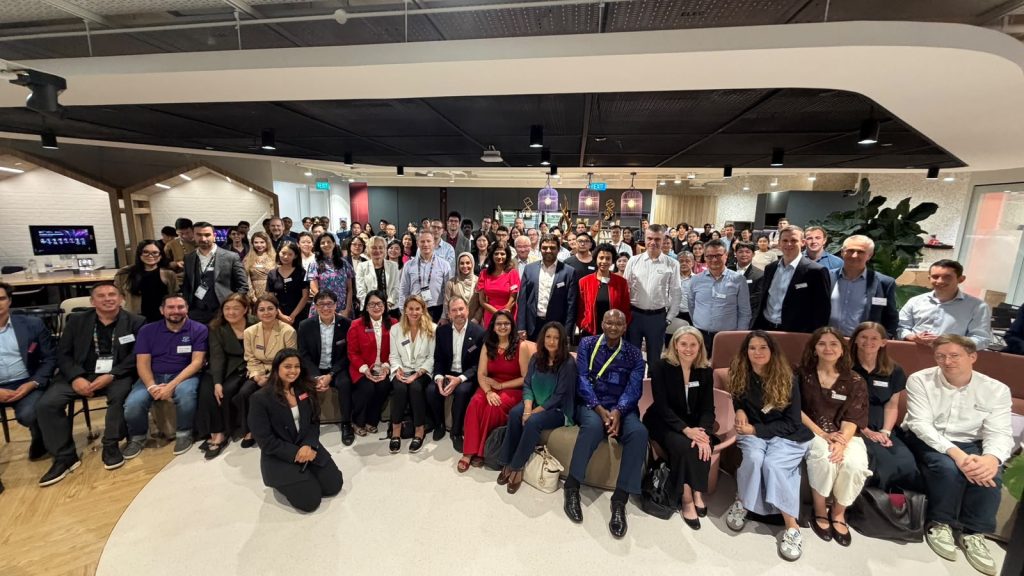
Looking back at Singapore FinTech Festival 2026, I see a clear connection between the different conversations.
Agentic AI is creating new possibilities for autonomous financial services.
Digital money and payment infrastructure are evolving.
Regulators are developing more collaborative and evidence-informed approaches to innovation.
Financial institutions are exploring new opportunities to improve services, manage risk and support economic growth.
At the same time, AI is transforming jobs, leadership expectations and the capabilities organisations need.
These developments should not be considered separately.
We cannot build an increasingly autonomous financial system without asking who will govern it.
We cannot scale responsible AI without understanding how it is being implemented.
And we cannot expect institutions to transform successfully without investing in the people who will lead and operate them.
This leads to one of my strongest convictions:
AI capability should increasingly be viewed as part of the infrastructure of the financial system itself.
Just as institutions invest in payment systems, cybersecurity, data and operational resilience, they must invest in leadership, workforce readiness and the human judgement needed to govern AI.
Through CFTE, I remain committed to building these capabilities at scale.
And through Global Women in AI, I am equally committed to ensuring that women are actively shaping this transformation as innovators, financial leaders, policymakers, investors and board members.
The future of AI must create opportunities for more people to participate in and lead the economy it is transforming.
Building the future of finance together
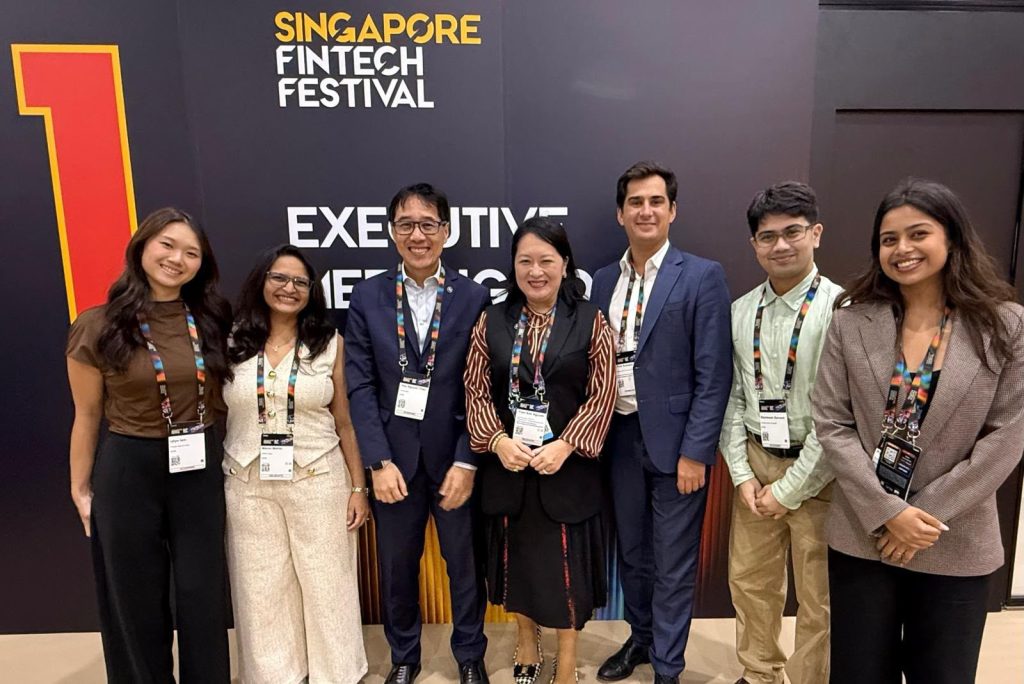
Singapore FinTech Festival 2026 reminded me once again why global collaboration matters so much.
The most valuable moments are not only the announcements and new technologies, but the discussions that connect people, challenge assumptions and create opportunities to work together.
I am particularly grateful to Sopnendu Mohanty, Pat Patel and the entire GFTN team for creating such an exceptional global platform.
It was wonderful to reconnect with friends, partners, CFTE alumni and leaders from across the financial-services ecosystem.
The future of finance is being rewired by artificial intelligence. But the quality of that future will depend on the knowledge we share, the capabilities we build and the decisions we make together.
That is my biggest takeaway from Singapore FinTech Festival 2026.